Ask Dr. Faith: Why It Feels So Hard to Say I Need Help
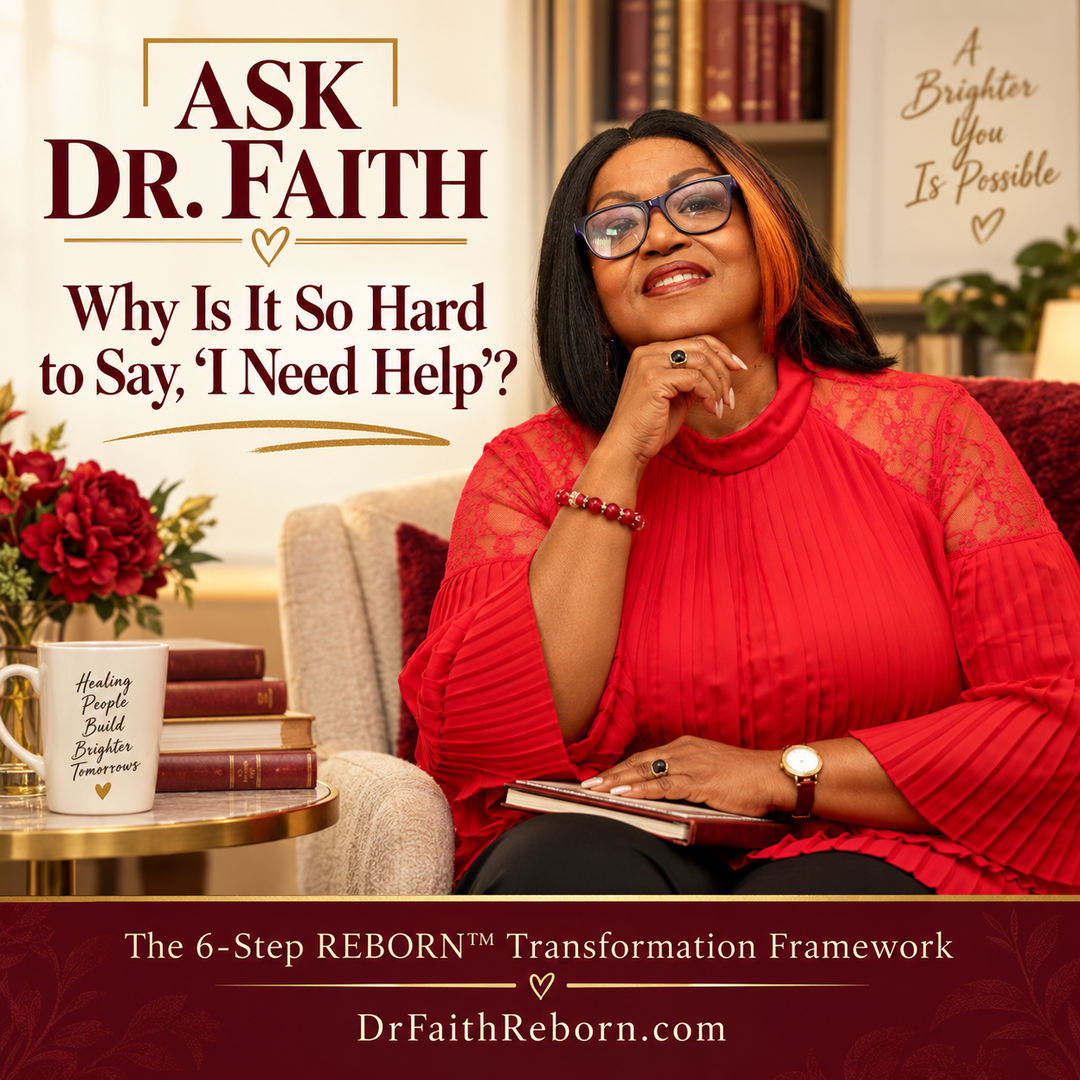
Dear Dr. Faith, I know I haven't been myself. I'm overwhelmed, tired and carrying things I don't know how to fix. But in my family, counseling isn't something we talk about. We're supposed to pray, be strong and keep family business inside the family. Part of me knows I need help. Another part feels ashamed for even saying it. Does asking for help mean I'm weak, or that my faith isn't strong enough?

Ask Dr. Faith
Dear Great Motivator,
Thank you for contacting us at Ask Dr. Faith. No. Asking for help does not mean you are weak. It does not mean your faith is failing. It does not mean you are dishonoring your family.
It means something in you is still fighting to live whole.
I want to answer you with tenderness and truth. I come to this as a faith leader, author, spiritual counselor, and a woman with lived experience. I am not a licensed psychotherapist, and I will not pretend to be. What I can do is sit with the spiritual weight of your question and help you name what may be happening inside.
Many people, especially many Black adults, have grown up hearing messages like:
“Don’t tell people our business.”
“Pray about it and keep going.”
“You’re too blessed to be depressed.”
“Other people had it worse.”
“Therapy is for people who can’t handle life.”
Those words may have been meant to protect. Sometimes they came from people who survived by staying quiet, staying strong, and never letting anyone see them break. But survival habits can become spiritual burdens when they keep you from healing.
So let’s walk through this using The 6-Step REBORN™ Transformation Framework. Not as a formula to “fix” you, but as a faithful way to begin again.

1. Recognize what you are really carrying
The first step is to recognize the shame, secrecy, and pressure sitting under the words “I need help.”
You said, “Part of me knows I need help. Another part feels ashamed.”
That divided feeling matters.
One part of you can hear your own pain clearly. It knows you are overwhelmed. It knows you have been tired too long. It knows prayer has been part of your survival, but you may also need more support than you currently have.
Another part of you carries the old family rules. Be strong. Stay quiet. Smile in public. Don’t let people know what is really happening. Don’t embarrass the family. Don’t make it seem like God has not been good.
That kind of pressure can make help feel like betrayal.
But naming pain is not betrayal. Silence is not the same as strength. Sometimes silence is just fear wearing church clothes.
There is a difference between having a hard season and being a hard person. There is a difference between needing support and being incapable. There is a difference between spiritual warfare and untreated emotional wounds. Sometimes all of those things can be tangled together.
Recognition sounds like this:
“I am not myself, and I do not have to pretend that I am.”
That sentence alone can be holy ground.
2. Explore where the message came from
Before you judge yourself for struggling to ask for help, explore where you learned that asking was dangerous.
Some families learned privacy because privacy kept them safe. Black families have often had to protect themselves in a world where vulnerability could be judged, punished, misunderstood, or used against them. Keeping family business inside the family may have come from real history, real harm, and real fear.
For previous generations, therapy may not have felt accessible, affordable, culturally safe, or spiritually respectful. Some people were taught to distrust systems because systems had not treated them with care. Others simply never had language for anxiety, trauma, grief, depression, burnout, or emotional overwhelm.
So when an elder says, “Just pray,” it may not always mean they do not love you. It may mean prayer was the only tool they were ever given.
Still, love does not make every message healthy.
You can honor what your family survived and still choose a different way to heal. You can respect your elders and still decide that secrecy will not run your life. You can carry your faith and still learn new emotional tools.
This is where the difference between privacy and harmful secrecy becomes clear.
Privacy says, “I get to choose who has access to my story.”
Harmful secrecy says, “I must suffer alone so no one feels uncomfortable.”
Privacy protects dignity. Harmful secrecy protects dysfunction.
Privacy creates wise boundaries. Harmful secrecy creates isolation.
Privacy can be healthy, sacred, and necessary. Harmful secrecy can keep pain alive for years because no one is allowed to tell the truth.
Ask yourself gently:
Who taught me that needing help was shameful?
What happened in my family when someone was struggling?
Did people receive care, or did they get criticized?
Am I protecting my peace, or am I protecting a pattern that is hurting me?
You may discover that the shame you feel did not start with you. That matters, because what did not start with you does not have to end by controlling you.

3. Breathe before you decide what help means
When shame gets loud, the body often reacts before the mind can sort things out. Your chest tightens. Your stomach turns. You start rehearsing what people will say. You imagine the judgment before anyone has spoken.
So before you make a decision about counseling, family, prayer, or support, breathe.
Try this short grounding reflection:
Place one hand over your heart and one hand on your stomach.
Inhale slowly and say within yourself, “God is here.”
Exhale slowly and say, “I do not have to hide.”
Inhale again and say, “I am still loved.”
Exhale and say, “I can take one step.”
Do that three times.
This is not a replacement for professional care. It is a way to return to the present moment when fear tries to pull you into old scripts.
Your nervous system needs gentleness. Your spirit needs truth. Your mind needs room to think.
A simple breath can remind you that you do not have to solve your whole life today. You only need enough steadiness to take the next faithful step.
4. Identify healthy options that do not require you to suffer alone
When people hear “get help,” they sometimes imagine one big, scary decision. They picture telling everybody everything. They picture being judged, labeled, or exposed. They picture a counselor who does not understand their faith, culture, family, or pain.
Help does not have to start that way.
Healthy options can include several levels of support.
A trusted person
This could be one emotionally mature friend, pastor, mentor, relative, or spiritual counselor. Choose someone who can listen without shaming you, preaching at you, or spreading your story.
A faith community that makes room for truth
Some spiritual spaces only know how to celebrate victory. Others also know how to sit with grief, confusion, exhaustion, and recovery. Look for the second kind.
A medical checkup
Sometimes exhaustion, mood changes, sleep issues, and anxiety can be connected to physical health. A primary care visit can be a wise part of caring for your whole self.
Professional counseling
A licensed therapist or counselor can help you process patterns, trauma, grief, stress, family dynamics, and emotional pain with trained support. If cultural understanding matters to you, it is valid to seek a provider who respects your lived experience and faith background.
A support group
Some people heal in rooms where they realize, “I am not the only one.” A group can reduce shame by replacing isolation with shared honesty.
Spiritual counseling or pastoral care
There are moments when the wound feels spiritual, relational, and emotional all at once. Spiritual care can help you pray, discern, forgive, grieve, and rebuild meaning. When deeper clinical support is needed, spiritual care can work alongside therapy, not against it.
The point is not to choose the “perfect” door. The point is to stop standing outside every door because shame told you none of them were for you.
5. Reach out without pitting faith against professional help
Let me say this plainly: faith and professional help can coexist.
Prayer and counseling do not have to be enemies. Scripture and emotional language do not cancel each other out. A therapist’s office is not proof that God is absent. Sometimes it can be one of the places where honesty finally has room to breathe.
If you had chest pain, most people who love you would tell you to pray and call the doctor. If your car stopped working, they would not tell you to only quote scripture over the engine. They would tell you to take it to someone trained to look beneath the hood.
Emotional pain also deserves care.
Research continues to show that stigma can affect mental-health knowledge and whether Black adults seek services. That makes sense. If a person expects judgment, dismissal, or spiritual criticism, they may wait until the pain becomes unbearable before reaching out.
But you do not have to wait until you break down to receive support.
Faith can give you courage to seek help. Faith can remind you that your life is worth tending. Faith can teach you that God cares about the hidden places, not just the public testimony.
A strong faith does not require a silent heart.
In this Ask Dr. Faith response, I want you to hear a clear invitation: let help be part of your healing, not an accusation against your faith.

6. Take one next step you can actually do
When you are overwhelmed, a long healing plan can feel like another burden. So do not start with ten steps. Start with one.
Here is your next step:
Write down the name of one safe person or one professional resource you can contact this week.
That is all.
Not the whole family. Not everybody at church. Not a public announcement. One safe person or one resource.
Then write one sentence you could send:
“I have not been myself lately, and I think I need support. Are you available to talk this week?”
Or:
“I am looking for a counselor and wanted to ask about availability, cost, and whether you work with people navigating faith and family expectations.”
If sending the message feels too hard, save it as a draft. If calling feels too much, email. If therapy feels too big, talk with a trusted doctor, pastor, or spiritual counselor first and ask for referrals.
Small steps count. Beginnings count. A whisper of truth can be the beginning of a rebirth.
That is one of the sacred themes I return to in my work and in my book, Reborn: life can begin again after silence, shame, disappointment, and survival. Beginning again does not always look dramatic. Sometimes it looks like telling the truth in a trembling voice.

What to remember when shame speaks again
Shame will probably not disappear the first time you ask for help. Old messages may rise up again.
You may hear, “You should be stronger.”
Answer with, “Strength includes honesty.”
You may hear, “Don’t tell anyone our business.”
Answer with, “I can protect my privacy without hiding my pain.”
You may hear, “Just pray about it.”
Answer with, “I will pray, and I will also receive the help God makes available.”
You may hear, “What will people think?”
Answer with, “My healing cannot be governed by other people’s discomfort.”
The goal is not to become careless with your story. Your story is sacred. Not everyone has earned access to it.
The goal is to stop confusing secrecy with holiness.
God is not glorified by your exhaustion. Your family is not made stronger by your silent suffering. Your faith is not proven by refusing care.
There is a kind of resilience that keeps going because it has no choice. There is another kind of resilience that learns to receive support, tell the truth, and live renewed. That second kind may be calling your name now.

Four paths for your next faithful step
If this letter sounds like your life, please do not rush past that recognition. Let it become an invitation.
Here are four possible paths:
For spiritual counseling, reflection, and support as you discern your next step.
For encouragement around resilience, renewal, and beginning again after painful seasons.
For connection with others who are also choosing truth, healing, and growth.
For teachings and conversations that help you keep moving toward wholeness.
You do not have to announce your pain to the world. You do not have to explain your healing to everyone. You simply have to stop abandoning yourself to keep other people comfortable.
Saying “I need help” may feel hard because it challenges family rules, spiritual misunderstandings, and old survival instincts. Still, it may also be one of the bravest prayers you ever pray.
And dear one, God can meet you there too. Ask Dr. Faith!
Educational-support disclaimer: This article offers faith-based education and spiritual support. It is not therapy, medical advice, or a substitute for care from a licensed mental-health professional. If you are in immediate danger, thinking about harming yourself, or unable to stay safe, call 911 in the US or contact the 988 Suicide and Crisis Lifeline by calling or texting 988.



Comments